In visual reading, the professional analyzes the test strip after it has come into contact with the sample. It is necessary to adhere to the times specified for each parameter and compare the color changes observed on the strip with the scale provided by the manufacturer. This step requires careful attention, as the reading of each parameter depends on visual perception and comparison with a reference. Factors such as reaction time, ambient lighting, and the interpreter’s own assessment of color changes can interfere with this evaluation.
It is precisely at this operational stage that automation can bring significant benefits to the routine. When the test strip is read using an analyzer, the evaluation of reactive areas is no longer dependent solely on visual comparison by the professional but is instead performed instrumentally by the equipment. As a result, there is greater standardization in the reading process and a reduction in interference from factors related to visual interpretation, contributing to more reliable results at the stage that will lead to the test report.
In addition to its impact on the standardization of image interpretation, automation also changes the amount of time spent on this step. As image interpretation is performed by the equipment, it becomes possible to process more exams in less time, which can directly contribute to productivity and reduce the time spent on manual image interpretation steps. This benefit becomes even more significant when considering the cost of integrating the analyzers into routine operations, as it allows for the automation of an important operational step without requiring a complex infrastructure or a large investment.
What changes when the reading is taken by the analyzer?
The main change is in the way the strip is analyzed.
In the visual reading, the professional observes the color change for each parameter and visually compares it to the reference scale. In the automated reading, the analyzer performs this measurement instrumentally and displays the results according to the equipment's system, allowing for qualitative and semi-quantitative results, while alerting the operator to any abnormal results that are found.
This difference is important mainly because the reading is no longer done manually—with all the risks that entails—but is instead performed by a machine, especially in settings with a high volume of exams.
In addition to reading samples, the analyzers offer features that greatly assist with routine workflow tasks, such as sample identification via barcode, result storage, printing, interface capabilities, and various processing modes, allowing the operator to work in continuous or single-step mode.
In other words, automating the reading process does not mean removing the professional from the process. It means transferring a critical step of the operation to the equipment, while leaving the professional responsible for preparing the sample, inserting the strip into the equipment, and monitoring the process.
When does automation start to make sense in your daily routine?
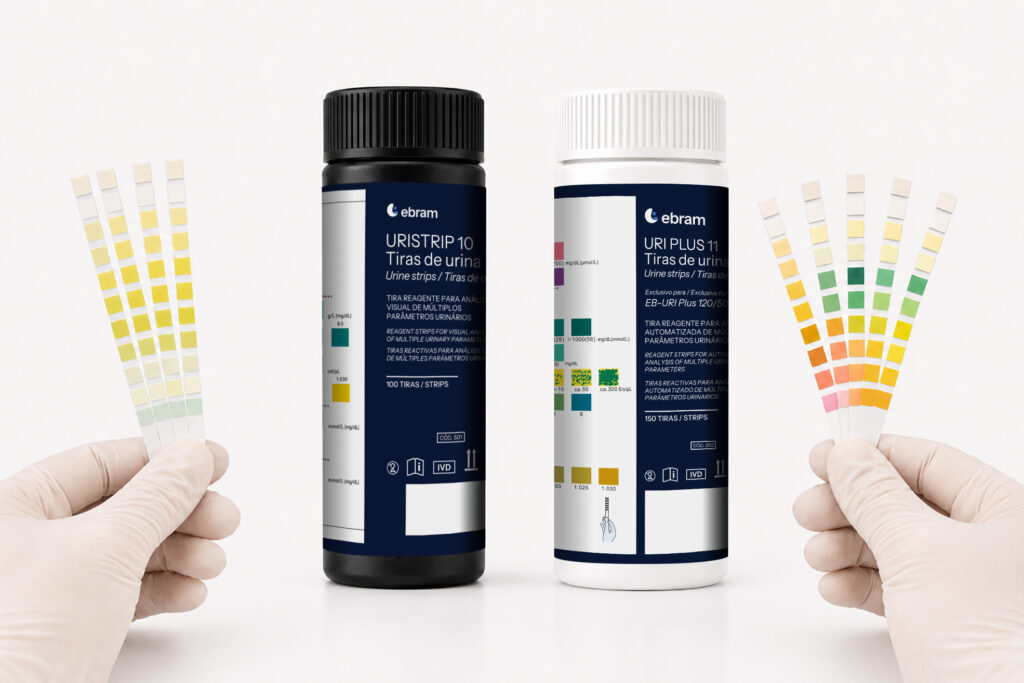
There is no single way to perform a urinalysis. Visual reading of the test strip remains an important option for different types of laboratories and is part of the Ebram Urinalysis Line.
A URISTRIP 10 Visual This Ebram test strip is designed for visual interpretation and allows for qualitative and semi-quantitative analysis of 10 urinary parameters by comparing color changes. It is a suitable option for routine testing where visual interpretation meets the volume of tests.
When the sample volume increases or when the laboratory seeks greater reliability in its analyses and wants to reduce the number of visual inspection steps, automated reading may become a viable option.
In this scenario, the analyzer handles the instrumental reading of the strip, while the professional remains responsible for the other steps in the process.
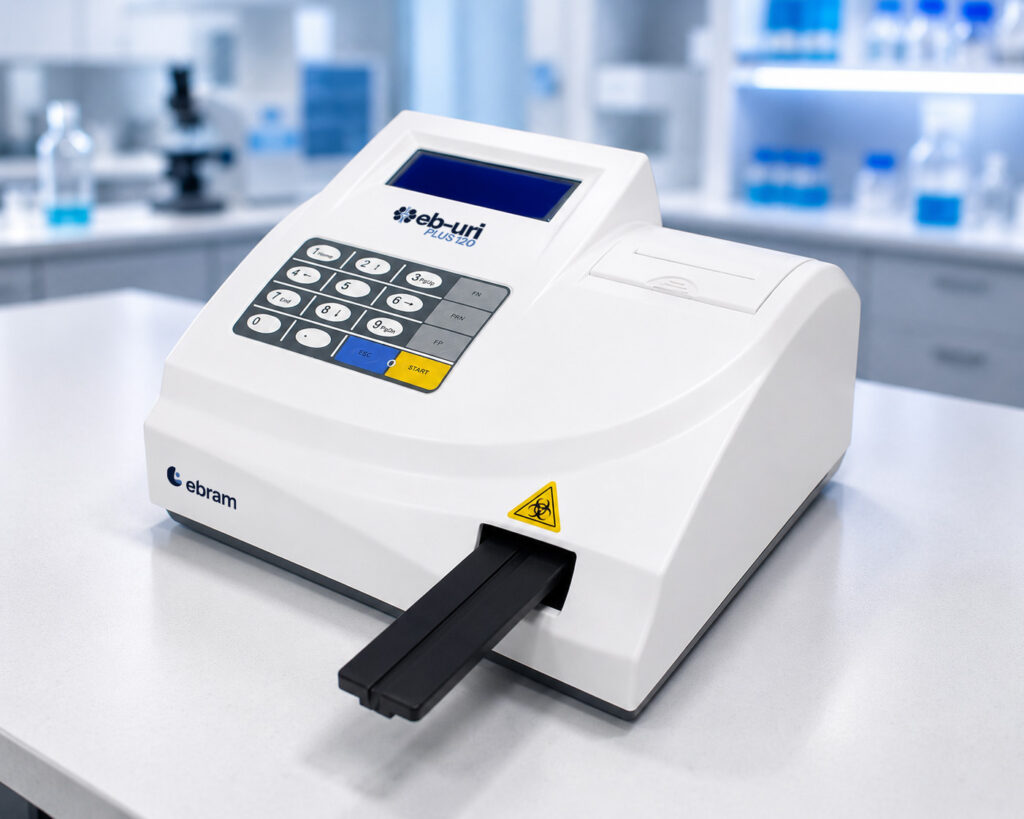
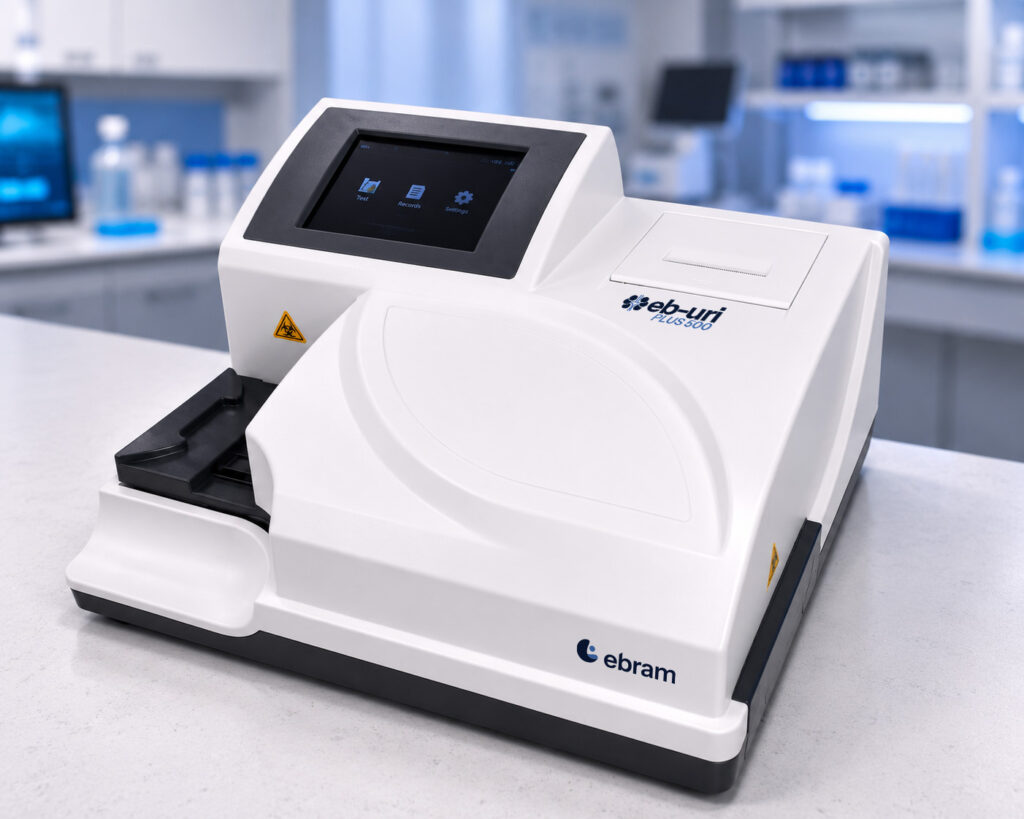
Once automated testing becomes a natural part of the routine, the choice of analyzer should also take into account the volume of tests and the laboratory’s workflow. For this reason, the Ebram Urinalysis Line offers two models: the EB URIPLUS 120 and EB URIPLUS 500, which have different capacities and processing methods. Below, learn about the features of each piece of equipment.

 Talk to a consultant (sales)




 by
