Diabetes mellitus remains one of the major challenges facing global public health. According to the International Diabetes Federation (IDF), about 589 million adults live with the disease, and that number is expected to continue to grow in the coming decades. In Brazil, the situation follows this trend, underscoring the need for laboratory tests that contribute to increasingly precise and individualized monitoring.
Although the glycated hemoglobin While HbA1c remains an important marker for monitoring diabetes, different clinical situations may require assessment at shorter intervals. It is precisely in this context that fructosamine becomes relevant, providing additional information about glycemic control over the past two to three weeks.
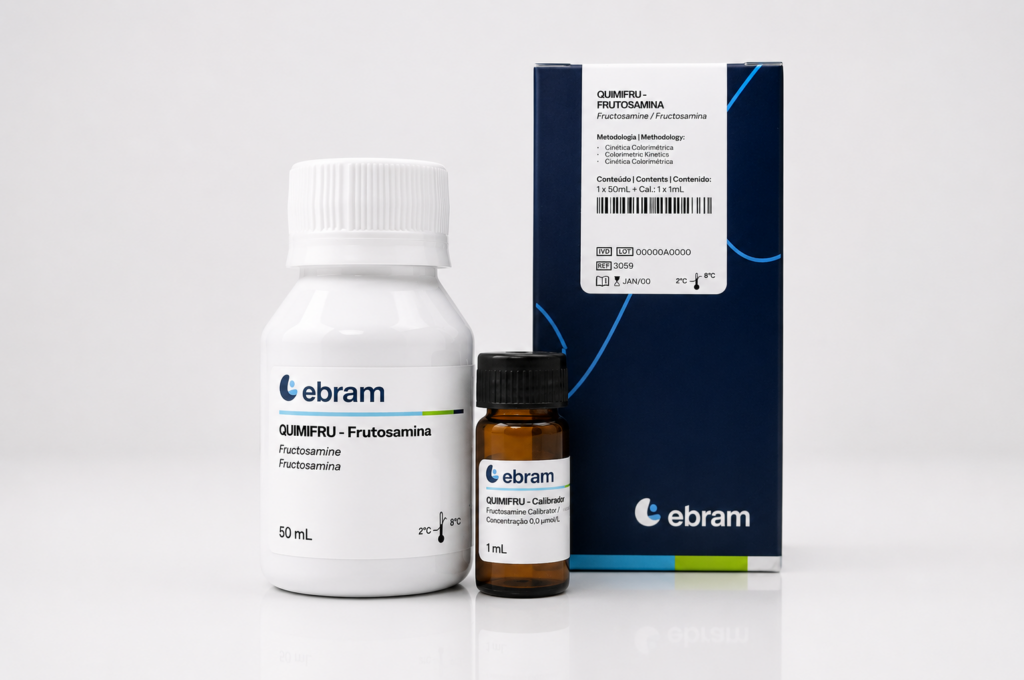
In response to the existing demand in laboratories for fructosamine testing, Ebram is expanding its Biochemistry Line with the launch of the QUIMIFRU – Frutosamine, your 17th monoreagent in the series. But after all, what is fructosamine, and why has this test been attracting growing interest in laboratory practice?
What is frutrosamine?
Fructosamine is a biochemical marker formed by the binding of glucose to serum proteins—primarily albumin—through a process called nonenzymatic glycation. Because these proteins have a relatively short half-life in the bloodstream, the test reflects the average blood glucose level over the past two to three weeks.
In practice, the test can help assess more recent changes in glycemic control, providing additional insight into the patient’s progress. For this reason, the test can assist healthcare professionals in situations that require closer monitoring of the response to treatment.
This determination is performed using a well-established colorimetric method widely used in biochemistry, providing reliable results when combined with good analytical practices and proper clinical interpretation.
More than just an isolated marker, fructosamine broadens the scope for assessing glycemic control when interpreted in conjunction with other laboratory tests and the patient’s clinical presentation.
When does Frutosamina make a difference?
In clinical practice, there are situations in which monitoring a patient’s response at shorter intervals can provide important information for managing treatment.
One example is starting a new treatment or adjusting the dosage of diabetes medications. In such cases, waiting a few months to see how things progress may not be the best strategy when there is a need to determine more quickly whether the changes are producing the expected effect.
Frutosamine may also be a useful alternative in situations where the interpretation of glycated hemoglobin may be subject to interference.
This can occur, for example, in patients with:
● hemolytic anemias;
● hemoglobinopathies;
● recent blood transfusions;
● conditions that affect red blood cell survival.
In these scenarios, assessment based on serum proteins can provide additional information to aid in the interpretation of glycemic control.
In addition, the test can aid in the care of pregnant women with diabetes, a period during which metabolic changes occur more rapidly and often require closer monitoring. Similarly, patients undergoing significant changes in lifestyle or treatment regimens may benefit from a short-term evaluation.
These applications do not mean that frutrosamine replaces other established markers. On the contrary, they demonstrate how different tests can address specific clinical needs, expanding the possibilities for patient monitoring.
 Talk to a consultant (sales)





 by
by
